

The High Cost of Incorrect Alloy Selection
Mechanical engineers face severe structural risks during hardware prototyping daily. Selecting the wrong metal alloy destroys expensive industrial projects instantly. High-stress environments demand specific tensile strengths to prevent catastrophic mechanical failure. Ignoring fundamental metallurgy costs procurement departments millions in rejected assemblies. Consequently, hardware designers must specify the correct industrial aluminum extrusion to guarantee long-term operational safety. We engineer precision metal alloys that eliminate structural weaknesses permanently. Our advanced factory supplies critical material grades to global manufacturing brands every single day. We understand the precise chemical compositions required for absolute hardware survival.
Structural failures ruin expensive factory automation equipment rapidly. You prevent these disastrous mechanical breakdowns by integrating the correct 6000-series alloy into your initial CAD blueprints. We utilize pure aluminum billets to maximize burst resistance and tensile strength across complex networks. Our engineering team verifies every single chemical material test report before initiating mass production. We guarantee your machinery frames survive intense continuous vibration flawlessly. Stop risking your factory automation on unverified material brokers. Upgrade your procurement strategy today. Secure industry-leading extrusion quality. Master the physics of aluminum metallurgy with our comprehensive engineering guide below.
Chemical Composition and Magnesium/Silicon

Engineers must understand basic aluminum metallurgy completely. Raw aluminum lacks industrial structural strength natively. Manufacturers add specific elements to create alloys. Silicon and magnesium dominate the 6000 series. These elements dictate the final physical properties. You choose alloys based on these specific additions. We control the chemical mix flawlessly.
The Role of Silicon in Fluidity
Silicon improves metal flow during extrusion. It lowers the melting point slightly safely. This fluidity prevents steel die clogging. Manufacturers push complex shapes much faster. Silicon ensures incredibly sharp profile corners. It fills microscopic die crevices perfectly. 6063 contains precise silicon measurements. You receive highly accurate custom geometries. We extrude complex heat sinks effortlessly. Silicon guarantees smooth exterior surface finishes. You avoid ugly manufacturing defects entirely.
Magnesium for Structural Strength
Magnesium adds vital structural strength immediately. It forms magnesium silicide compounds natively. These compounds harden the aluminum matrix. Engineers rely on this massive strength. The metal resists bending under heavy pressure. You build safer industrial machinery frames. 6061 contains higher magnesium levels natively. This increases the ultimate yield strength. You support heavy factory loads confidently. We test tensile strength limits continuously. Magnesium protects your massive hardware investments.
Understanding Alloy Tempering (T5/T6)
Tempering alters the internal metal structure. Heat treatment hardens the alloy significantly. T5 cools quickly directly after extrusion. It provides excellent baseline structural strength. T6 requires a secondary heating oven. The metal bakes for several hours. T6 delivers maximum ultimate yield strength. We verify temper ratings using machines. You specify T6 for critical loads. Proper tempering prevents sudden catastrophic failure. We execute thermal processing perfectly always.
The 6063 Advantage: Extrudability and Finish
Furthermore, selecting the 6063 alloy dictates the aesthetic success of many electronic components completely. Consequently, engineers must evaluate surface finish requirements before finalizing procurement orders. Therefore, we utilize 6063 aluminum to ensure absolute visual perfection. Moreover, understanding the processing advantages of 6063 remains crucial for B2B product developers.
Forming Complex Internal Webs
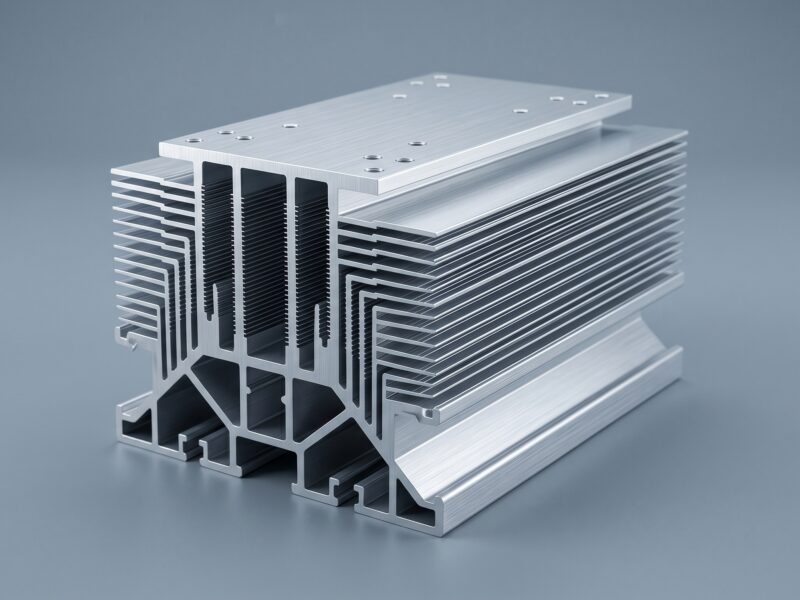
Specifically, 6063 aluminum flows exceptionally well through complex steel dies. Furthermore, this high extrudability allows engineers to design incredibly thin internal webs securely. Therefore, we can extrude intricate multi-chamber profiles without breaking the expensive tooling. Moreover, the superior material flow reduces manufacturing scrap significantly, lowering your unit cost. Consequently, when designing delicate internal structures, 6063 remains the undisputed industry standard. Thus, you secure highly detailed geometries safely.
Superior Anodizing Response
Additionally, 6063 provides a flawless surface finish immediately after leaving the extrusion press natively. Consequently, it responds beautifully to standard clear and hardcoat anodizing treatments. Therefore, the metal absorbs chemical dyes uniformly without showing ugly grain lines or streaks. Furthermore, this process creates an impenetrable protective oxide layer securely. Moreover, architectural and consumer electronics demand this pristine visual appearance constantly. Hence, 6063 elevates your brand’s perceived quality perfectly.
Ideal for Heat Sinks and Cylinders
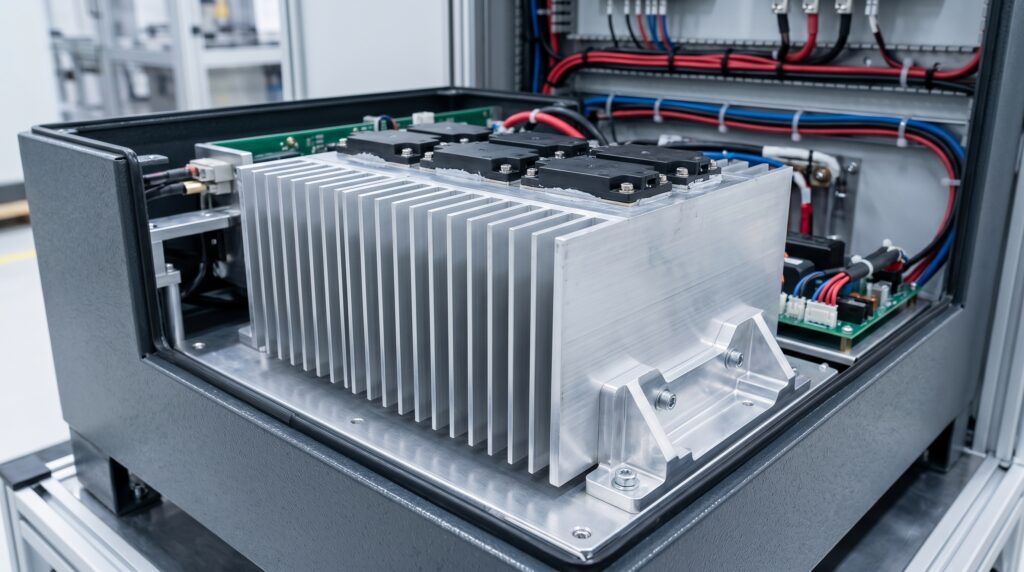
Subsequently, thermal engineers prefer 6063 specifically for advanced heat dissipation profiles. For example, the linear grain structure of 6063 maximizes thermal conductivity flawlessly. Furthermore, we use it extensively to manufacture smooth pneumatic cylinder tubes natively. Consequently, the internal bore requires minimal secondary honing to achieve a mirror-like finish. Therefore, 6063 dominates the automation hardware sector completely. Thus, whether cooling a processor or driving a piston, 6063 delivers absolute functional excellence.
Comparison Matrix: 6000 vs 7000 Series Alloys
Procurement directors evaluate industrial materials based on tensile strength, extrudability index, and surface finish quality constantly. Notably, analyzing comparative metallurgical strategies optimizes long-term manufacturing profitability heavily. The following matrix contrasts core aluminum alloys to help you specify the correct metal for your B2B industrial projects:
| Aluminum Alloy | Tensile Strength (Yield) | Extrudability Index | Surface Finish Quality |
| 6063 (T5/T6) | Moderate. Yield strength around 214 MPa (T6). Perfect for standard automation, heat sinks, and pneumatic cylinders natively. | Excellent. Flows rapidly through complex steel dies, allowing for extremely intricate fin designs and thin walls completely. | Superior. Provides a near mirror-like finish post-extrusion, making it the absolute best choice for cosmetic anodizing securely. |
| 6061 (T6) | High. Yield strength around 276 MPa (T6). Engineered specifically for heavy load-bearing structural frames and brackets natively. | Moderate. The added magnesium makes it stiffer to extrude, limiting the complexity of the final profile shape completely. | Good. Machines beautifully but exhibits visible grain lines, requiring heavy polishing before high-end cosmetic anodizing securely. |
| 7075 (T6) | Extreme. Aerospace grade, exceeding 500 MPa. Used exclusively in high-stress military and aerospace components natively. | Poor. Incredibly difficult to extrude into anything other than simple solid bars or basic thick-walled tubes completely. | Fair. Highly prone to uneven anodizing and difficult to weld natively, strictly used for hidden mechanical strength securely. |
The 6061 Advantage: Structural Yield Strength
When structural failure is not an option, engineers pivot immediately to the 6061 alloy. We transform high-strength 6061 aluminum billets into robust industrial frameworks natively. Standard 6063 fails when subjected to massive sheer forces or heavy static loads. You must deploy specialized 6061 profiles to maintain absolute mechanical integrity under extreme factory conditions. We guarantee your load-bearing structures meet rigorous global safety standards.
Machinability for CNC Parts
Secondary CNC machining requires specific metal hardness properties securely. Soft alloys melt and gum up expensive cutting tools natively. However, 6061-T6 aluminum chips cleanly during aggressive milling and deep-hole drilling. It prevents gummy residue from destroying our multi-axis CNC spindles. We use 6061 exclusively for highly precise CNC components like the aluminum terminal connector. You receive perfectly threaded holes and exact dimensional tolerances completely. It is the king of machine-shop alloys.
Load-Bearing Applications
High yield strength defines the fundamental purpose of the 6061 alloy natively. It supports massive structural frames effortlessly without bending securely. Industrial automation lines heavily rely on thick 6061 framing to support heavy robotic arms. It resists catastrophic bending forces entirely, ensuring your factory floor remains safe. For instance, when securing massive solar arrays against hurricane winds, a 6061 aluminum photovoltaic clamp guarantees that the glass panels will not tear off the roof securely. It provides ultimate peace of mind.
Welding Compatibility
Assembly processes often require strong welded joints natively. Welders strongly prefer 6061 for complex industrial assembly projects. It maintains excellent structural integrity near the heat-affected weld zone securely. You can construct massive support brackets and platforms safely using standard TIG or MIG welding techniques natively. We build heavy-duty industrial hardware easily because 6061 forgives intense thermal joining processes completely.
Frequently Asked Questions (FAQ)
1. Do you provide material certificates to prove the alloy is genuine 6061 or 6063?
We deploy rigorous quality assurance strictly natively. Yes securely. We supply official mill test reports (MTRs) tracing the exact chemical composition of the billets used for your production run, guaranteeing you receive the exact structural strength you paid for completely.
2. Can I switch from 6063 to 6061 using the exact same extrusion die?
We execute precise mechanical engineering flawlessly. No securely. Because 6061 is significantly stiffer, it flows differently under immense pressure. Attempting to push 6061 through a die designed for 6063 will likely crack the steel tooling natively. New alloys require new dies completely.
3. What is the actual difference between T5 and T6 heat treatments?
We execute rapid logistical engineering flawlessly. T5 involves cooling the profile rapidly with high-velocity air immediately as it exits the extrusion press natively. T6 requires the profile to be solution heat-treated and artificially aged in a massive oven for hours, yielding much higher strength securely.
4. Which alloy should I choose if my part requires extensive CNC milling?
We deploy rigorous manufacturing protocols strictly natively. You should specify 6061-T6 securely. Its higher magnesium content makes the metal harder, allowing CNC cutting tools to shear the material cleanly rather than tearing or smearing it, resulting in superior machined tolerances completely.
5. Which alloy is best for manufacturing thermal management heat sinks?
We engineer highly scalable aesthetic solutions flawlessly. You must specify 6063 natively. The chemical composition of 6063 provides a significantly higher thermal conductivity rating than 6061 securely, allowing heat to transfer away from critical electronic components much faster completely.
6. How does 6061 perform in highly corrosive marine environments?
We engineer robust supply chains flawlessly. Bare 6061 performs adequately natively, but for true marine survival, it must undergo MIL-A-8625 Type III Hardcoat Anodizing securely. This thick oxide layer completely seals the 6061 matrix from destructive saltwater pitting completely.
Conclusion
Metallurgical competition within the lucrative global manufacturing market remains incredibly fierce constantly. Managing your material supply chain poorly by using unverified alloys destroys your structural equity instantly. You must execute your physical design strategy through a highly verified manufacturing partner. We engineer perfect metal systems that guarantee absolute tensile strength and operational dominance. By migrating your purchasing to our dedicated facility for custom extrusion materials, you acquire flawless operational reliability. Settle for nothing less than absolute functional excellence brilliant effortlessly. Explore our comprehensive extrusion services today. Whether you need a standard 6061 aluminum profile or a complex proprietary design, we deliver. Please contact us for material specs immediately to source the world’s most reliable industrial aluminum extrusion securely.