

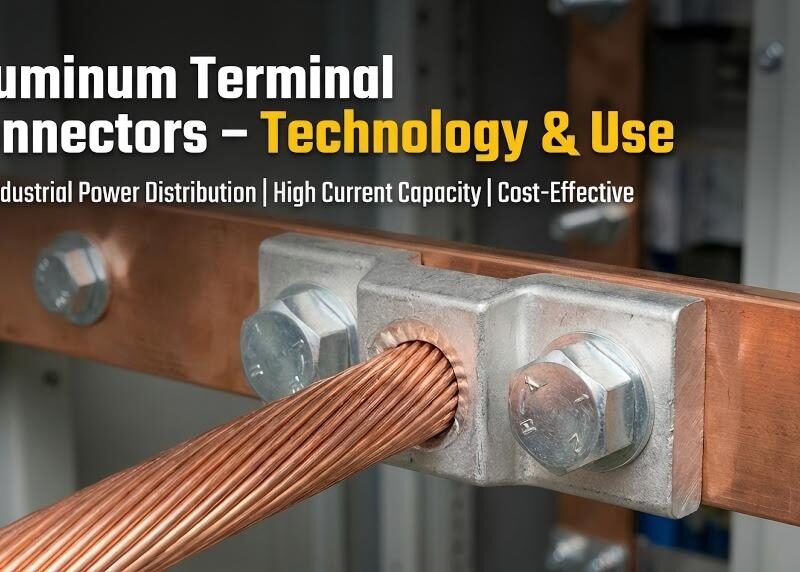
Introduction: The Strategic Shift in Power Distribution
In the high-stakes world of industrial power distribution, the connector is often the smallest component with the largest responsibility. A single failed lug can bring down a substation, halt a production line, or cause catastrophic thermal damage to switchgear. For over a century, copper was the undisputed king of conductivity. However, with copper prices fluctuating wildly and the demand for lightweight infrastructure growing, the industry has aggressively pivoted toward the aluminum terminal connector.
This shift is not merely about cost-cutting; it is backed by advanced material science. Modern aluminum alloys, combined with sophisticated plating and inhibitor technologies, now offer performance parity with copper at a fraction of the weight and cost. But engineering with aluminum requires a distinct set of rules.
This technical guide explores the metallurgy of electrical aluminum, the critical science of oxidation management, and the installation protocols necessary to prevent ‘cold flow’ failure. Whether you are terminating high-voltage cables or designing renewable energy systems using aluminum solar clamps, understanding connection technology is vital.
Electrical Conductivity: Aluminum Terminal Connector vs. Copper
The most common objection to aluminum is conductivity. Let’s look at the physics.
The IACS Benchmark
The International Annealed Copper Standard (IACS) sets copper at 100% conductivity. Electrical grade aluminum (typically 1350 or 6061 series) has a conductivity of approximately 61% IACS. At first glance, this seems inferior. However, this metric ignores density.
Conductivity by Weight
Copper is more than three times denser than aluminum (8.96 g/cm³ vs. 2.70 g/cm³). When you calculate conductivity per kilogram, aluminum is actually ~200% more efficient than copper. This means that to carry the same amperage, an aluminum conductor needs a larger cross-sectional area (roughly 1.6x larger diameter), but the total assembly will still be significantly lighter.
For overhead lines and heavy industrial busbars, this weight reduction translates to fewer support structures and easier installation. Learn more about our custom conductive profiles on our Aluminum Profiles page.
Cost Benefit Analysis: Why Industry is Shifting to Aluminum
The economics of power distribution are undeniable. Copper is a semi-precious metal with high market volatility. Aluminum is abundant and stable.
Project Savings
On a typical large-scale commercial project (e.g., a data center or factory), switching feeders from copper to aluminum can save 20-50% on material costs. While the connector itself (the aluminum lug) might be slightly larger, the savings on the kilometers of cable connected to it are massive.
Theft Deterrence
An overlooked benefit is theft. Copper cable theft is a global plague affecting infrastructure. Aluminum has a much lower scrap value, making it an unattractive target for thieves, thereby increasing system security.
Connector Design Considerations and Current Ratings
Designing an aluminum terminal connector differs from copper. You cannot simply use a copper lug on aluminum wire.
Barrel Thickness and Contact Area
Because aluminum has lower conductivity per volume, aluminum lugs feature thicker barrel walls and longer palms (contact pads). This increased surface area compensates for the lower conductivity, ensuring that the connector itself does not become a thermal bottleneck.
Thermal Expansion Compatibility
Aluminum expands and contracts with heat more than copper. If you use a connector that doesn’t match the expansion rate of the conductor, the joint will loosen over time (thermal cycling). Anrele connectors are engineered to match the thermal coefficients of standard aluminum cables. For thermal management solutions in electronics, see our Heat Sink products.
Oxidation Management: Conductive Grease and Plating Techniques
The Achilles’ heel of aluminum is oxidation. When exposed to air, aluminum instantly forms a hard, insulating oxide layer (Al₂O₃). If this layer is trapped inside a connection, it creates high resistance, heat, and eventual failure.
The Role of Inhibitor Compound (Grease)
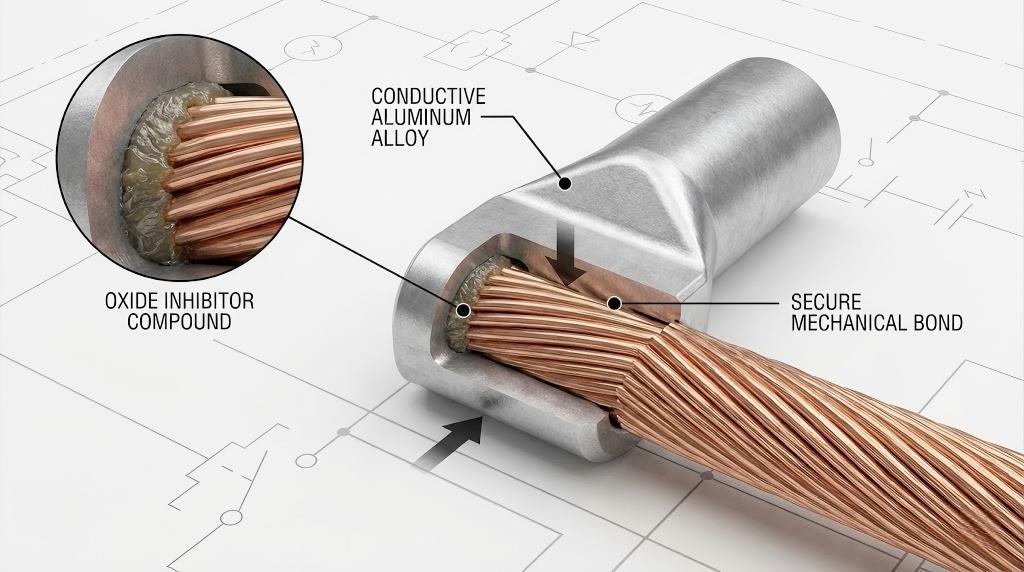
High-quality aluminum connectors come pre-filled with an oxide-inhibiting joint compound. This grease seals the connection from air and moisture. More importantly, it contains conductive grit (often zinc or nickel particles). When the connector is crimped, these particles bite through the oxide layer, establishing a low-resistance electrical path.
Tin Plating
Most Anrele aluminum terminals are electro-tin plated. Tin is soft and conductive. It prevents the aluminum from oxidizing further and allows the terminal to be compatible with both aluminum and copper busbars (AL9CU dual rating). We offer various plating services detailed on our Service Page.
Installation Standards and Safety Compliance (Torque Specs)
A great product installed poorly will fail. This is especially true for aluminum.
The ‘Cold Flow’ Phenomenon
Aluminum is a ‘soft’ metal that can creep or flow away from pressure over time, a process known as cold flow. If a technician simply tightens a bolt ‘until it feels tight,’ the aluminum will eventually relax, the joint will loosen, and arcing will occur.
Torque is Mandatory
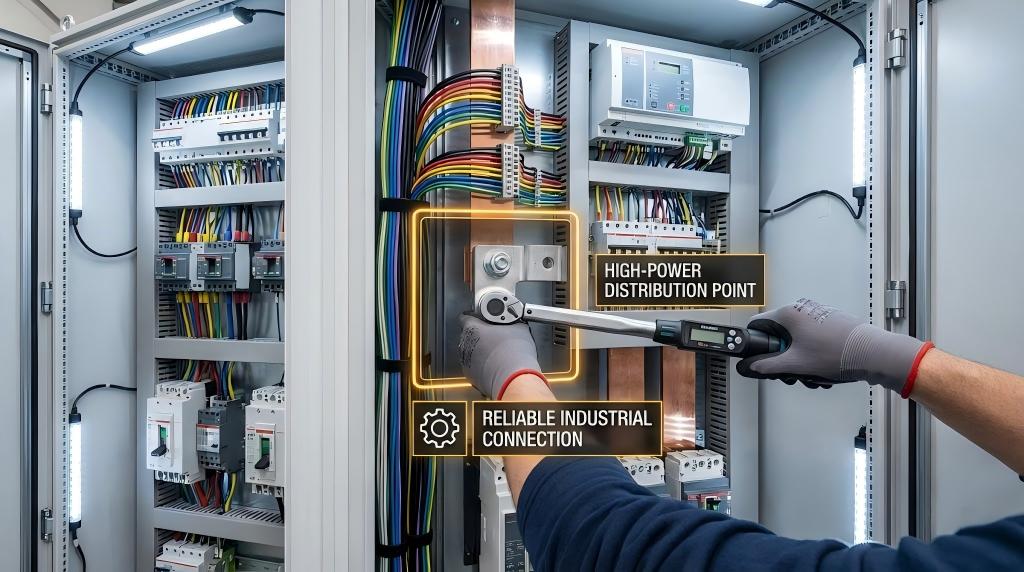
Installers must use a calibrated torque wrench to tighten fasteners to the manufacturer’s exact specification. Additionally, the use of Belleville washers (conical spring washers) is recommended. These washers maintain constant pressure on the joint even as the aluminum expands and contracts.
Industrial Usage Scenarios (Transformers & Switchgear)
Anrele aluminum connectors are ubiquitous in modern infrastructure.
Power Distribution
In utility substations, large aluminum lugs connect overhead transmission lines to transformers. The weight savings here reduce the mechanical load on the bushings.
Renewable Energy
In solar and wind farms, the DC cabling runs are long and expensive. Aluminum connectors enable the use of cost-effective aluminum feeder cables to bring power from the inverter to the grid. For specific solar mounting hardware, check our Solar Clamps category.
Conclusion: Reliable Connections at Lower Cost
The industry has moved past the fears of the 1970s regarding aluminum wiring. With modern alloy formulations, precision manufacturing, and correct installation protocols, aluminum terminal connectors offer a reliability record that matches copper at a significantly lower total cost of ownership.
At Anrele, we manufacture connectors that meet the rigorous demands of global industrial standards. Whether you need standard lugs or custom-designed power terminals, our engineering team is ready to support your project. Contact Anrele to request a catalog or technical consultation. Learn more about our company values at About Us.
FAQ: Common Technical Questions
1. Are aluminum terminal connectors safe for high current?
Yes. When properly sized (larger cross-section than copper) and installed with correct torque, they handle high current just as safely as copper. They are standard in high-voltage transmission lines worldwide.
2. How is oxidation managed in aluminum connectors?
We manage it in three ways: 1) Using high-purity alloy, 2) Electro-tin plating the surface to prevent air contact, and 3) Using oxide-inhibiting grease during installation to break down any existing oxide layer.
3. Can I connect aluminum terminals to copper busbars?
Yes, but you must use a ‘Dual Rated’ (AL9CU) connector, typically tin-plated. The plating prevents galvanic corrosion between the aluminum lug and the copper busbar. Never connect bare aluminum to bare copper in a humid environment.
4. Do I need special crimping tools for aluminum lugs?
Yes. Aluminum lugs have thicker walls than copper lugs. You must use a crimping die specifically colored-coded or marked for aluminum (often larger than the copper equivalent) to ensure a gas-tight crimp.
5. What is the weight saving of aluminum vs. copper connectors?
Aluminum is ~30% the weight of copper. Even though the aluminum component is dimensionally larger, the total assembly is significantly lighter, reducing structural load on equipment.
6. How do you prevent ‘cold flow’ in aluminum connections?
Cold flow is prevented by 1) Designing the connector with sufficient surface area (lower pressure per square mm), 2) Using correct installation torque, and 3) Using Belleville spring washers to maintain constant contact pressure during thermal cycling.