Introduction:
In the fast-paced world of industrial automation, the pneumatic cylinder is the workhorse. It pushes, pulls, lifts, and stamps millions of times a year. While the piston seals often get the blame for failures, the root cause is frequently the component they slide against: the Cylinder Tube (Barrel).
Historically, heavy-duty cylinders were made from honed steel or brass. These materials are strong but heavy, expensive, and prone to corrosion. Today, the standard for high-performance automation—from ISO 15552 (DNC) to compact cylinders—is the Hard Anodized Aluminum Extrusion.
But why? Is it just about weight? Or is there a deeper materials science advantage? At Anrele, we manufacture thousands of meters of pneumatic profile every month. In this engineering guide, we will analyze the microscopic interaction between the seal and the tube wall, discuss Vickers Hardness (HV), Surface Roughness (Ra), and why a specific ‘Mickey Mouse’ profile might be the smartest engineering choice for your next machine design.
1. Material Science: The Magic of Hard Anodizing
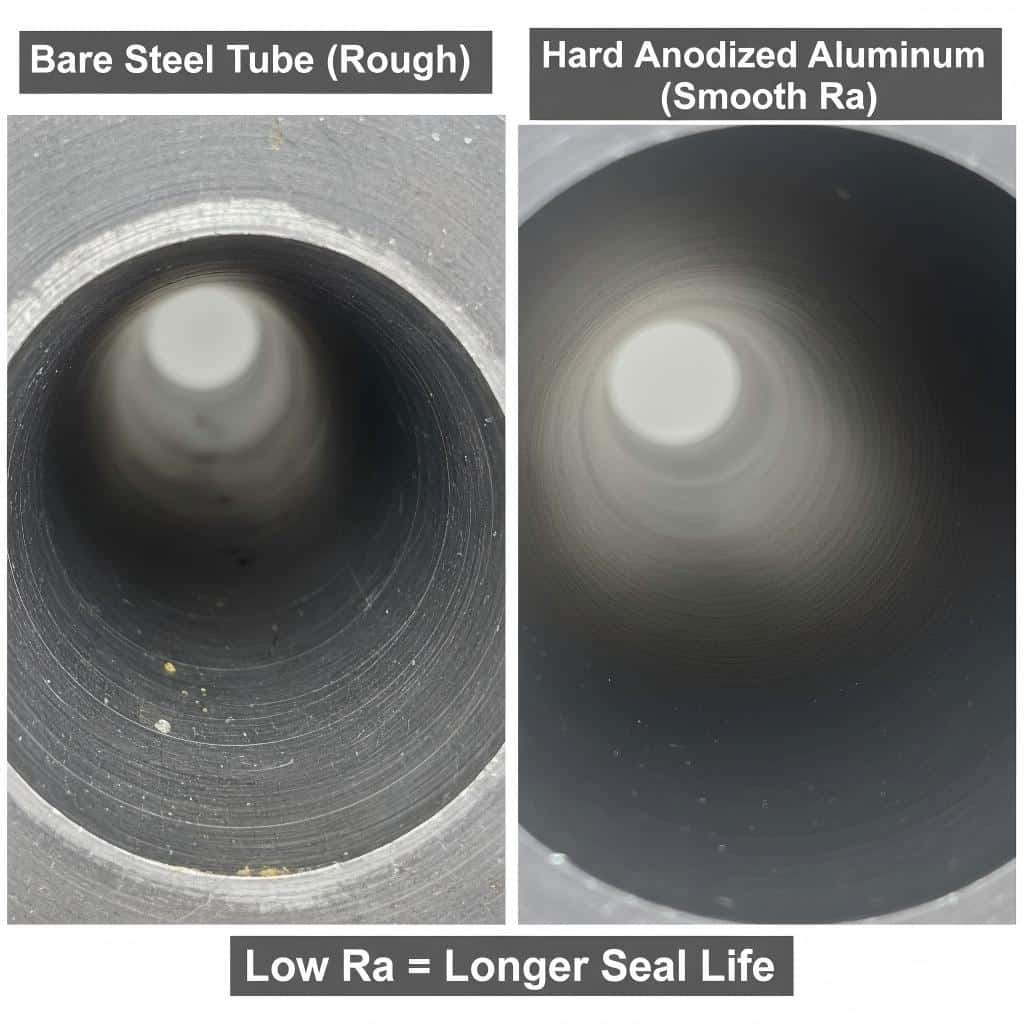
Raw aluminum (typically 6063-T5 alloy) is soft. It has a hardness of roughly 80-100 HV (Vickers Hardness). If you ran a rubber piston seal against raw aluminum for a million cycles, the aluminum would wear down, scoring the surface and causing air bypass (leakage).
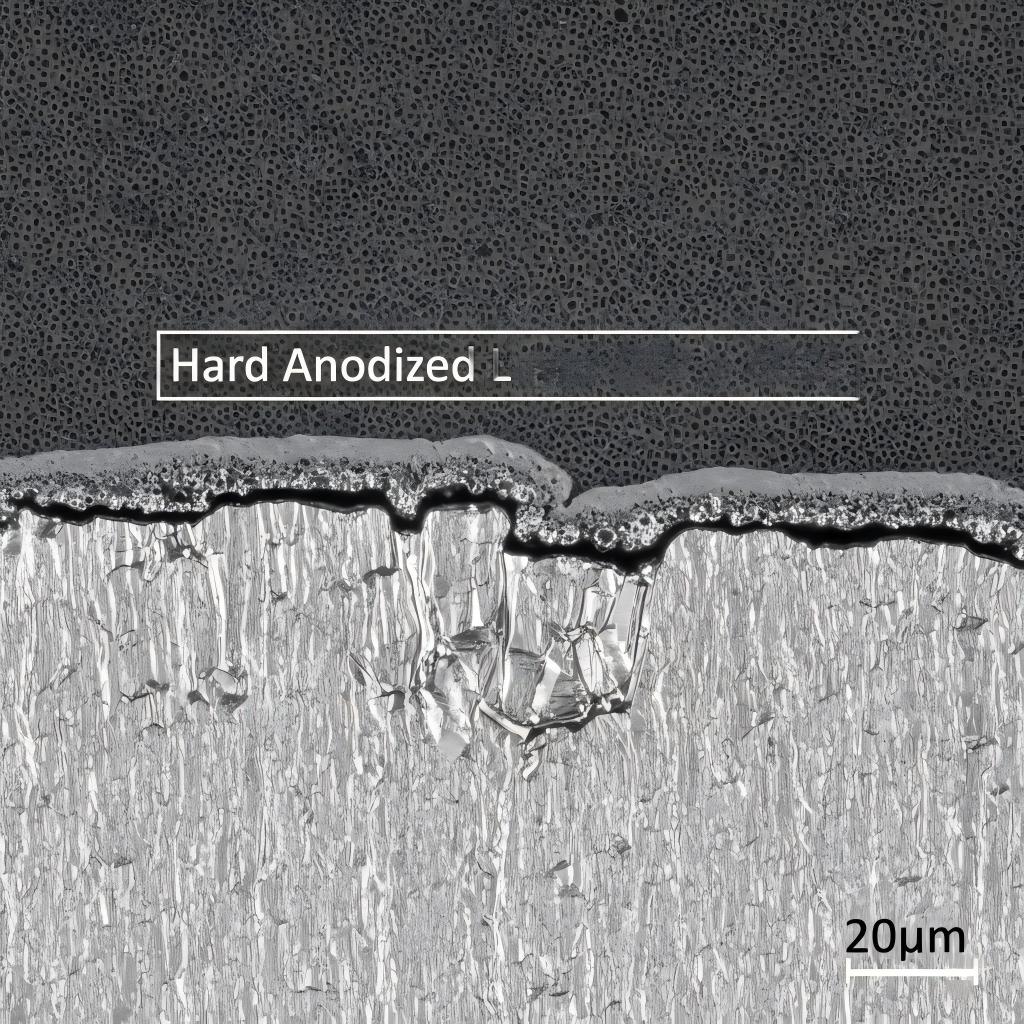
To fix this, we don’t just ‘paint’ the tube; we undergo an electrochemical transformation called Hard Anodizing (Type III). We submerge the extruded aluminum tube in a sulfuric acid bath cooled to near freezing (0°C to -4°C) and apply a high current density. Unlike plating (which adds material *on top*), anodizing grows an aluminum oxide (Al2O3) layer *out of* the base metal.
The Hardness Transformation
This oxide layer is a ceramic.
• Raw Aluminum: ~100 HV
• Hard Anodized Layer: 400 HV to 600 HV
To put this in perspective, Hard Anodized aluminum is nearly as hard as tool steel and harder than hard chrome plating in many abrasion tests. This ceramic-like skin renders the inner bore virtually immune to the abrasive wear of piston seals. Anrele Standard: We guarantee an oxide film thickness of >20μm (microns) on the Inner Diameter (ID).
2. Tribology: Surface Roughness (Ra) and “Stick-Slip”
Hardness prevents scratches, but Surface Roughness (Ra) determines friction. If the tube is too rough, it acts like sandpaper. If it is *too* smooth, it wipes away all lubrication.
The “Stick-Slip” Phenomenon
In pneumatics, ‘Stick-Slip’ is the jerky movement of a cylinder at slow speeds. It happens when the static friction is significantly higher than the dynamic friction. • Mirror Finish (Ra < 0.1μm): Dangerously smooth. The seal acts like a squeegee, removing all oil.
• Rough Finish (Ra > 0.8μm): The peaks of the metal profile cut into the seal.
The Anrele Gold Standard (Ra 0.2 – 0.4μm): We achieve a precise ID roughness of Ra 0.2μm to 0.4μm. At this level, the surface has ‘valleys’ deep enough to hold microscopic pockets of grease, ensuring Hydrodynamic Lubrication.
3. Profile Geometry: Mickey Mouse vs. Round
When browsing the Anrele catalog, you will see two main categories of cylinder tubes.
The “Mickey Mouse” Profile (ISO 15552 / DNC)
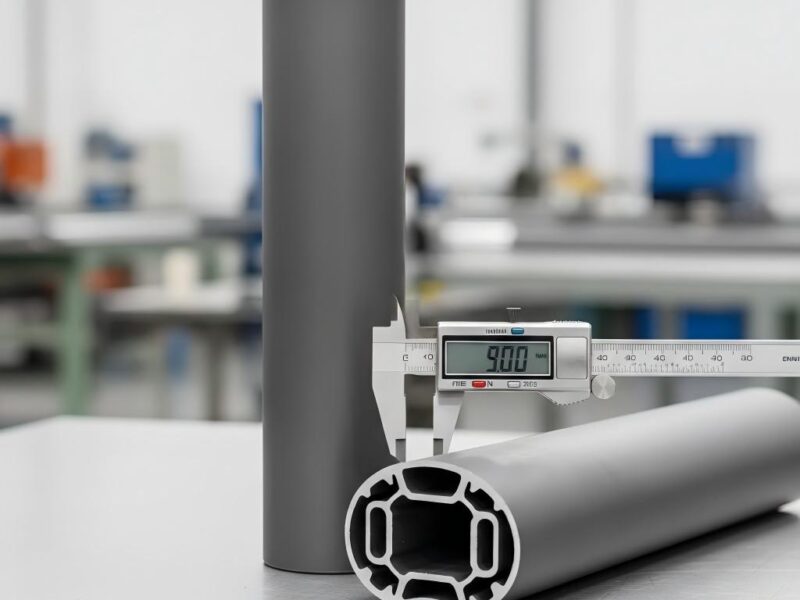
Named for its cross-sectional shape, this profile features a round bore with four distinct ‘lobes’ or corners. Sensor Grooves:The key advantage. T-Slots are extruded directly into the aluminum body. This allows you to slide in Reed Switches or Hall Effect sensors flush with the surface. Torsional Stiffness:The complex shape acts like a structural beam, offering higher resistance to bending than a simple round tube.
The Round Tube (SC / MAL Series)
A simple round extrusion, often used for ‘Tie-Rod’ cylinders where the steel rods are external. Preferred in Food & Beverage applications because there are no T-slots to trap bacteria.
4. Engineering Comparison: Aluminum vs. Stainless vs. Steel
| Feature | Hard Anodized Aluminum | Honed Carbon Steel | Stainless Steel (304) |
| Density | 2.7 g/cm³ (Light) | 7.85 g/cm³ (Heavy) | 8.0 g/cm³ (Heavy) |
| Hardness | 400 – 600 HV | 200 – 250 HV | 200 HV (Soft) |
| Corrosion | Excellent (Oxide Layer) | Poor (Needs oil) | Superior |
| Magnetic Sensor | Yes (Non-Magnetic) | No (Shields Flux) | Variable |
| Roughness (Ra) | 0.2 – 0.4 μm | 0.2 – 0.4 μm | 0.4 – 0.8 μm |
The ‘Magnetic’ Factor:Pneumatic cylinders use a magnetic ring on the piston to trigger sensors. Steel tubes block magnetic fields. Aluminum is non-magnetic, allowing reliable sensor triggering.
5. Engineering Calculation: Wall Thickness & Hoop Stress
Hoop Stress (σ) = (P × d) / (2 × t). Where P=Pressure (10 bar), d=ID (100mm), t=Thickness (2.5mm).
Stress = 20 MPa.
Aluminum 6063-T5 Yield Strength = ~145 MPa.
Safety Factor: 145 / 20 = 7.25 Anrele tubes can withstand massive pressure spikes.
6. Industry Applications
1. Pick and Place Gantries: Weight is the enemy of speed. Anrele aluminum cylinders reduce the moving mass, allowing for higher G-force acceleration.
2. Packaging Machinery: The Hard Anodized layer ensures the bore does not wear out over millions of cycles.
3. Outdoor/Marine: Salt spray eats steel. Hard Anodized aluminum (tested to >500 hours Salt Spray) resists corrosion.
7. Extended FAQ: Cylinder Tube Selection
Q1: Can I hone the tube after buying it?
A: NO. Honing will remove the 20μm hard anodized layer, exposing soft raw aluminum. The cylinder will fail in days.
Q2: What is the standard length?
A: We extrude in lengths of 2 to 3 meters. We can sell full lengths or cut-to-size.
Q3: Does anodizing affect tolerance?
A: Yes, it adds thickness. Anrele accounts for this in the die design to ensure the final product meets ISO H11 tolerance.
Conclusion
The pneumatic cylinder tube is more than just a pipe; it is a precision bearing surface. By choosing Anrele Hard Anodized Aluminum Tubes, you are leveraging the ceramic-like hardness of aluminum oxide to ensure millions of trouble-free cycles.
Ready to build your cylinders? Browse our Aluminum Pneumatic Cylinder Tube Catalog or contact us for a sample kit of profiles.