

Introduction

Procurement officers manage highly complex supply chain networks continuously. Securing a reliable metal manufacturer solves only half of the industrial equation. You must transport heavy cargo across violent trans-Pacific ocean routes safely. Mastering the exact logistics of importing aluminum profiles China guarantees absolute operational success. Massive container ships encounter brutal cyclonic weather systems during their ocean transit. These weather systems generate severe kinetic rolling forces across the cargo hold. These dynamic forces assault the fragile metal cargo violently.
Generic manufacturers completely misunderstand severe marine transport physics. They load bare metal extrusions directly into unreinforced steel shipping containers. The aluminum profiles slide aggressively against each other during the ocean voyage. This abrasive friction destroys premium anodized surface finishes instantly. Furthermore, raw ocean air penetrates the container walls continuously. This highly saline humidity attacks the raw metal, triggering severe galvanic corrosion. You receive a container filled entirely with unusable, oxidized metal scrap.
You must strictly enforce advanced export logistics protocols immediately. Partner directly with an elite Original Equipment Manufacturer (OEM) that executes flawless industrial packaging. This technical guide deconstructs the exact physics of secure ocean freight. We analyze strict phytosanitary crate construction and complex international customs legalities. We reveal exactly how our advanced export facility guarantees flawless delivery for your global global metal procurement contracts.
Industrial Packaging for Long Extrusions
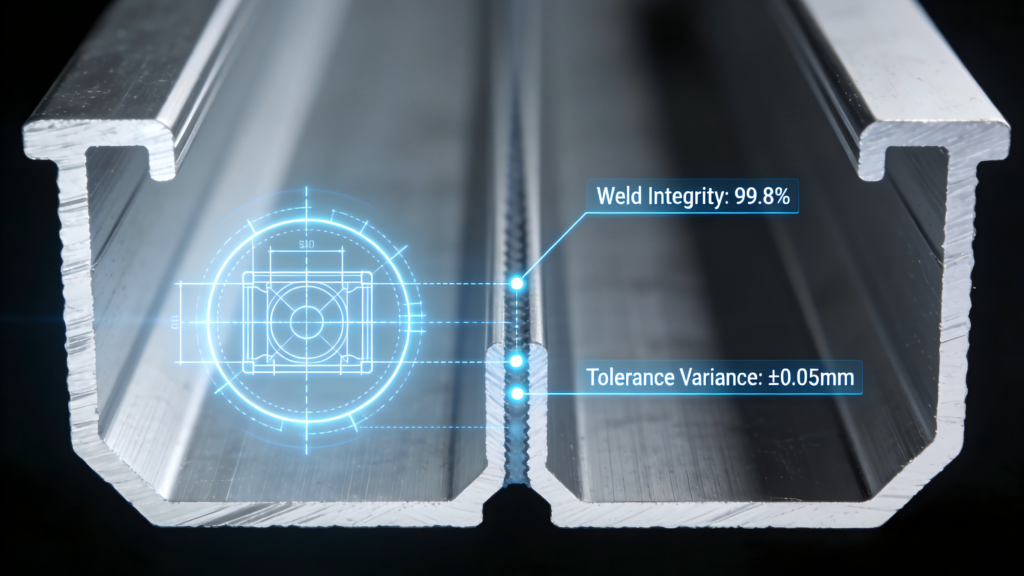
Flawless structural components require absolutely perfect industrial packaging continuously. Severe transit vibration ruins high-end architectural aesthetics instantly and creates massive scrap rates. We engineer strict preventative packing protocols to neutralize these destructive kinetic forces. We protect your valuable cargo from physical and chemical degradation.
Applying Interleaving Protective Paper
Aluminum profiles scratch easily when they rub against identical metal surfaces. The continuous vibration of the ship engine generates intense localized friction. We prevent this abrasion by applying thick interleaving craft paper between every single profile. Technicians separate the metal layers meticulously using specialized pearl cotton foam sheets. This soft physical barrier absorbs the micro-vibrations completely. You receive a perfectly clean, architectural-grade finish on every single extruded piece without exception.
Heat-Shrink Wrapping Bundles
Ocean environments assault metal cargo with highly corrosive saline humidity continuously. We group the separated aluminum profiles into tight, manageable geometric bundles. Technicians encase these bundles completely inside heavy-duty polyethylene (PE) industrial shrink wrap. We blast the plastic wrap with high-temperature heat guns instantly. The plastic shrinks violently, forming an absolute, airtight seal around the metal. This impermeable barrier prevents caustic ocean moisture from triggering any surface oxidation during transit. We execute flawless aluminum extrusion shipping protocols always.
Constructing ISPM-15 Wooden Crates
Loose bundles crush each other during heavy container stacking operations. We engineer robust wooden crates to withstand massive vertical compressive loads safely. International customs law mandates strict adherence to ISPM-15 phytosanitary standards for all wood packaging. We utilize specialized heat-treated lumber to construct our heavy-duty export crates. This intense thermal baking eradicates all hidden wood-boring insects completely. Customs officers clear our compliant wooden crates instantly without initiating costly quarantine delays.
Leveraging Export Hubs in Taizhou and Ningbo
Furthermore, rapid global shipping requires massive geographic maritime infrastructure constantly. Taizhou provides this exact logistics ecosystem perfectly for international B2B buyers. Consequently, we leverage local deep-water seaports daily without external delays. Therefore, we execute continuous heavy-freight export operations rapidly. Moreover, this centralized industrial hub eliminates third-party domestic trucking friction completely. Thus, we deliver pure supply chain reliability directly to your regional distribution centers.
Consolidating Freight at Local Ports
Furthermore, our factory sits in extremely close proximity to the Ningbo-Zhoushan mega-port. Consequently, we minimize internal domestic drayage distances drastically. Therefore, heavy container trucks transport your cargo from our factory to the terminal instantly. Moreover, this tight geographic consolidation reduces your inland freight costs significantly. Thus, we eliminate the severe risks associated with long-haul domestic highway transport. We provide the most efficient Taizhou export logistics available today.
Rapid Customs Declarations
Consequently, bureaucratic paperwork delays valuable cargo at the terminal gates continuously. Therefore, we utilize advanced Electronic Data Interchange (EDI) systems for all customs declarations. Consequently, our dedicated export brokers submit commercial invoices and packing lists digitally. Thus, the Chinese customs authority reviews and clears our export cargo within hours. Moreover, this automated efficiency prevents your shipping container from missing its scheduled ocean vessel departure. We execute seamless international trade compliance continuously.
Optimizing 40HQ Container Payloads
Moreover, shipping dead air space destroys your B2B procurement budget rapidly. Therefore, we engineer our wooden crates to match specific container dimensions perfectly. Consequently, technicians load 40-foot High Cube (40HQ) containers with extreme volumetric precision. Thus, we calculate the exact weight distribution to prevent container chassis failure safely. Moreover, maximizing the payload density drops your landed freight cost per kilogram drastically. You succeed in importing industrial components with maximum financial efficiency.
Comparison Matrix: International Commercial Terms (Incoterms)
Procurement officers evaluate shipping liabilities, insurance risks, and freight control constantly. They analyze comparative Incoterms to optimize heavy global supply chains securely. The following matrix contrasts core international shipping terms based on buyer liability, insurance responsibility, and total freight control:
| Incoterm Standard | Buyer Financial Liability & Risk Transfer | Ocean Freight & Logistics Control | Insurance Responsibility & Claims |
| FOB (Free On Board) | Risk transfers to the buyer the exact moment the container crosses the ship rail at the origin port (e.g., Port of Ningbo). | The buyer selects the ocean carrier and negotiates the freight rate. Grants the buyer maximum control over total shipping costs. | The buyer must secure their own comprehensive marine insurance policy. The seller holds zero liability during the ocean voyage. |
| CIF (Cost, Insurance, Freight) | Risk transfers to the buyer at the origin port, but the seller pays the freight cost to the destination port (e.g., Los Angeles). | The seller selects the ocean carrier and books the vessel. The buyer surrenders control over transit times and freight markups. | The seller must purchase basic marine insurance naming the buyer as the beneficiary. The coverage is typically minimum legal liability. |
| EXW (Ex Works) | Risk transfers to the buyer immediately at the seller’s factory floor door. The buyer assumes absolute maximum liability. | The buyer manages the entire supply chain. The buyer hires domestic trucks, clears origin customs, and books the ocean vessel entirely. | The buyer must secure insurance for the entire journey, including the domestic trucking segment inside the origin country. |
Customs Clearance and Tariff Engineering
Executing a flawless international import requires absolute legal compliance continuously. Destination customs officers inspect heavy metal shipments with extreme legal scrutiny. We must provide mathematically perfect documentation to satisfy complex international trade laws. We engineer these specific commercial documents to guarantee rapid terminal clearance. We eliminate costly storage demurrage penalties across your entire supply chain.
Providing Accurate HS Codes
Global customs authorities classify all physical products using the Harmonized System (HS) code. An incorrect HS code triggers immediate cargo impoundment and severe financial fines. We analyze the exact metallurgical composition and mechanical shape of your aluminum profile. We provide the mathematically correct 6-digit or 8-digit international tariff classification code. This exact legal classification dictates the specific import duties your company must pay. We ensure total transparency and legal accuracy for your destination customs broker.
Managing Anti-Dumping Duties
Many Western countries impose severe Anti-Dumping (AD) and Countervailing Duties (CVD) on raw Chinese aluminum. These punitive tariffs destroy your procurement budget instantly if mismanaged. However, highly processed, custom-machined aluminum components frequently escape these raw material tariffs. We execute complex CNC machining and precision threading on your profiles before export. This physical transformation alters the legal classification of the metal component completely. You navigate complex international trade barriers safely.
Securing Certificates of Origin
Many nations negotiate lucrative bilateral free trade agreements continuously. These legal agreements lower or eliminate import tariffs for specific originating countries. We generate official Certificates of Origin (CO) through the Chinese Chamber of Commerce. This strict legal document proves the aluminum profiles originated definitively from our Taizhou factory. Your import broker presents this document to local authorities instantly. You secure massive tax reductions when importing custom aluminum extrusion products globally.
Frequently Asked Questions (FAQ)
1. What is the average trans-Pacific ocean transit time from Ningbo to Los Angeles?
Standard direct ocean routing from the Port of Ningbo to the Port of Los Angeles or Long Beach requires approximately 14 to 18 transit days. However, you must calculate an additional 5 to 7 days for origin port loading and destination terminal discharge and customs clearance.
2. Is it safe to ship 6-meter aluminum profiles via LCL (Less than Container Load)?
We strongly advise against shipping long structural extrusions via LCL. Consolidators pack your fragile metal crates alongside heavy, unpredictable third-party machinery inside the shared container. This chaotic environment causes severe crushing damage. We highly recommend booking a dedicated FCL (Full Container Load) for absolute safety.
3. Do you place desiccant bags inside the shipping container?
Yes. Ocean vessels experience massive temperature fluctuations called ‘container sweat’ during the voyage. This temperature swing causes severe condensation to rain down from the container ceiling. We hang industrial-grade, high-capacity desiccant bags inside the container to absorb this aggressive atmospheric moisture completely.
4. Who pays for terminal demurrage if customs holds the container?
Under standard FOB or CIF Incoterms, the buyer assumes total financial responsibility for the cargo once it reaches the destination port. If your local customs broker delays the paperwork, the terminal assesses severe daily demurrage fees against your company. You must prepare your import documents proactively.
5. What happens if the cargo ship encounters a severe storm and loses containers?
If the vessel captain declares ‘General Average’ during a catastrophic storm, all cargo owners must share the financial loss equally. You must purchase a comprehensive ‘All-Risk’ marine insurance policy before the vessel departs. This crucial policy covers total loss, physical damage, and General Average assessments completely.
6. Can you supply the original Bill of Lading (OBL) electronically?
Yes. We surrender the original paper Bill of Lading at the origin port immediately after the vessel departs. We request a Telex Release from the ocean carrier. We email you this digital release instantly. Your destination broker uses this digital file to claim the cargo without waiting for physical courier documents.
Conclusion
The logistical reality within the global manufacturing market remains irrefutable constantly. Relying on fragmented supply chains executing substandard packaging destroys your critical cargo instantly. You must source your structural components from a highly verified industrial aluminum profiles factory. We engineer perfect thermodynamic profiles and execute flawless export protocols safely. By migrating your procurement to our facility, you acquire absolute global supply chain stability.
Partner with an elite aluminum extrusion service manufacturer today to eliminate severe shipping damage forever. We deliver precision manufacturing directly from our high-tonnage foundries in Taizhou. Secure your bulk extrusion orders with our expert logistics managers. Upgrade your import strategy with premium, expertly packed aluminum structures. Contact our sales team and revolutionize your global B2B procurement network now.