Introduction: The Central Nervous System of Fluid Power
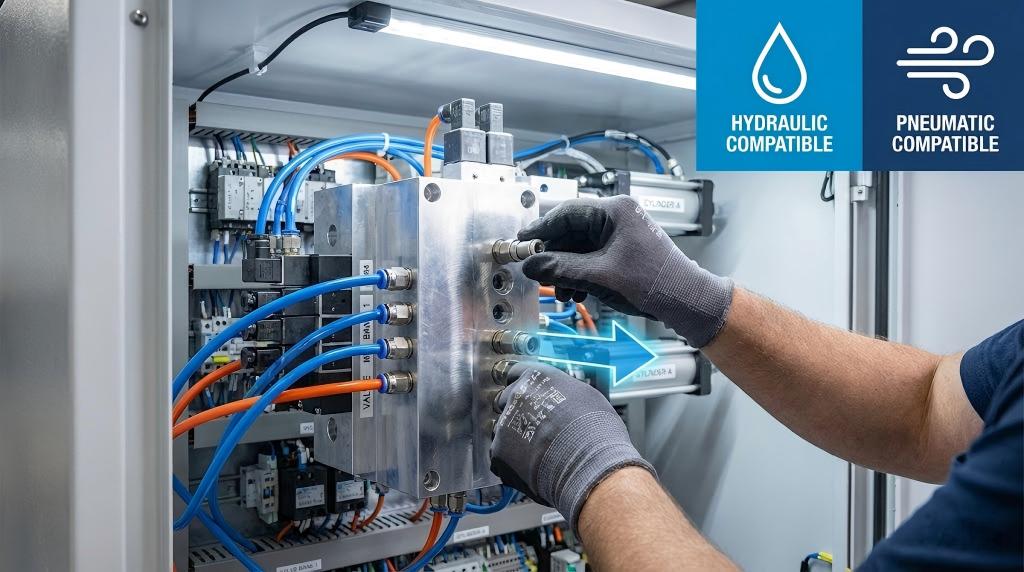
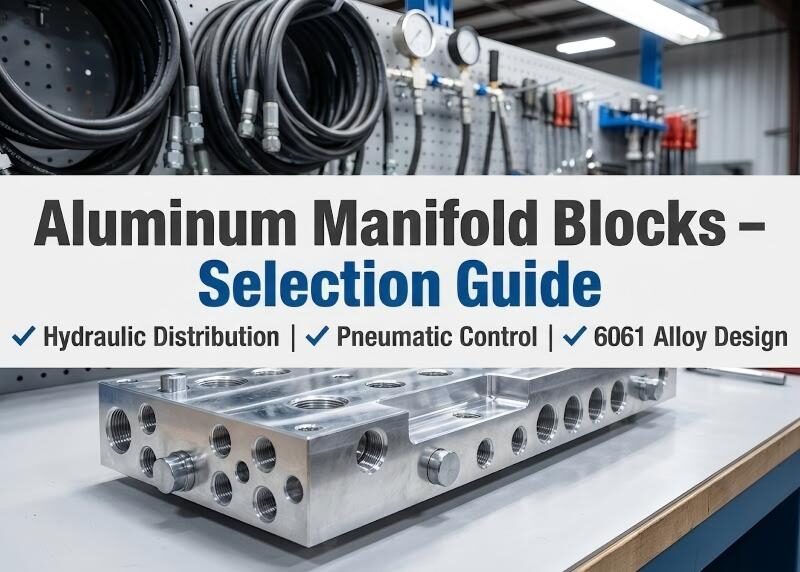
In any hydraulic or pneumatic system, the tubing and hoses are the veins, the pump is the heart, but the manifold is the brain. It is the centralized logic hub that directs the flow of energy, controlling pressure, direction, and rate. For decades, the industry default for high-pressure applications was Ductile Iron or Steel. However, the modern demand for compact, lightweight, and corrosion-resistant machinery has driven a massive shift toward the aluminum manifold block.
Transitioning from steel to aluminum in fluid power systems is not just about weight reduction; it is an engineering decision that affects thermal management, machining tolerance, and system longevity. Whether you are designing a mobile hydraulic unit for an excavator or a precision pneumatic control circuit for an automation line, the manifold block is where efficiency is either won or lost.
This guide provides a technical analysis of aluminum manifolds. We will dissect the material properties of 6061-T6 alloy, the critical importance of Computational Fluid Dynamics (CFD) in port design, and how to ensure your block can safely handle pressures up to 3000 PSI (210 bar). For custom design inquiries, our engineering team is ready to assist.pneumatic cylinder tubes.
Advantages of Aluminum Manifold Block over Steel (Weight & Machinability)
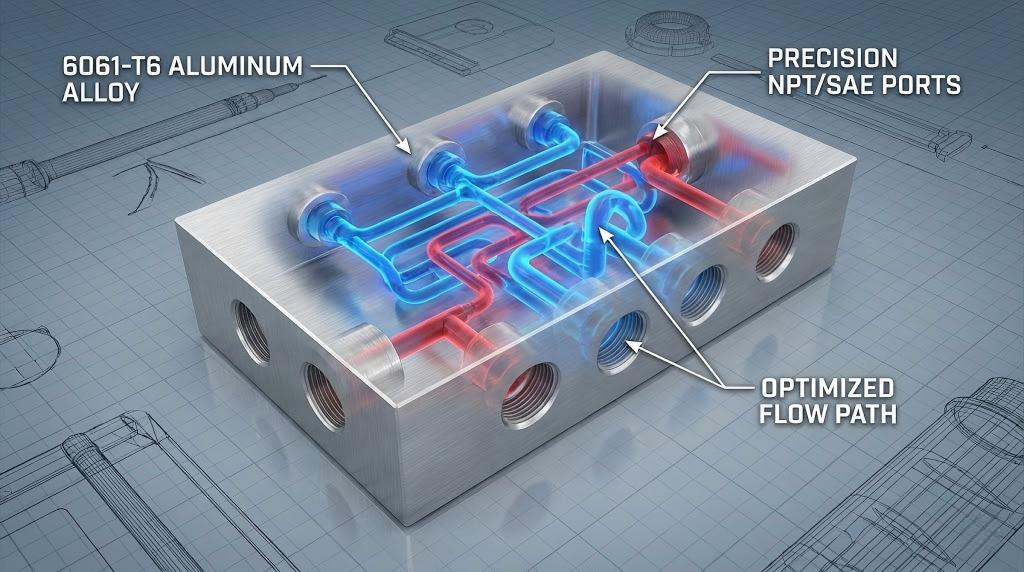
The skepticism regarding aluminum usually centers on strength. ‘Will it crack under pressure?’ is the most common question. To answer this, we must look at the specific metallurgy compared to traditional materials.
Strength-to-Weight Ratio
Standard carbon steel has a density of ~7.85 g/cm³. Aluminum 6061 has a density of ~2.7 g/cm³. By switching to aluminum, you reduce the component weight by nearly 65%. In mobile hydraulics (e.g., garbage trucks, aerial lifts, agricultural machinery), every kilogram saved on the hydraulic system increases the vehicle’s payload capacity and fuel efficiency. This lightweight property is why aluminum is also the standard for our
Machinability and Cost Efficiency
Manifold blocks require complex internal drilling. Channels intersect at precise angles to create logic circuits. Aluminum is significantly softer and produces smaller chips than steel. It can be drilled and milled 3x to 4x faster than steel, drastically reducing tool wear. This translates to a lower unit cost for the final product, especially for complex custom circuits produced via our custom aluminum profile services.
Port Layout and Flow Path Design Principles (Minimizing Turbulence)
An aluminum manifold block is only as good as its internal geometry. Poor design leads to turbulence, heat generation, and cavitation.
Minimizing Pressure Drop (ΔP)
Every 90-degree turn in a fluid channel creates resistance. Anrele engineers use specialized drill tooling to create angled internal galleries where possible, smoothing the flow path. We aim to keep fluid velocity below 4.5 m/s (15 ft/s) in pressure lines to prevent excessive heating. High velocity causes shear stress in the hydraulic fluid, which degrades the oil’s viscosity index over time.
Wall Thickness Integrity
In a compact manifold, channels often run dangerously close to each other. The rule of thumb is that the minimum wall thickness between two high-pressure channels should be at least 3mm to 5mm depending on the pressure rating. If the wall is too thin, the pressure differential can cause the wall to balloon or fatigue-crack, leading to internal leakage (cross-talk) that is impossible to diagnose visually.
Pressure, Flow Rate, and Sealing Considerations (Up to 3000 PSI)
Not all aluminum is suitable for fluid power. We primarily utilize two specific aerospace-grade alloys.
6061-T6 (The Industry Standard)
With a Yield Strength of ~276 MPa (40,000 psi), 6061-T6 is suitable for operating pressures up to 3000 PSI (210 Bar). It offers excellent corrosion resistance and anodizing quality. This is the go-to material for 90% of general industrial and mobile hydraulic applications.
7075-T6 (The High-Pressure Specialist)
For extreme pressures up to 5000 PSI (350 Bar) or high-cycle impulse loads, we upgrade to 7075-T6. It has a yield strength of ~503 MPa, comparable to some steels, but it is more expensive and harder to anodize.
CNC Precision: Importance of Burr-Free Internal Channels
CNC precision is paramount in fluid power. Learn more about our machining capabilities on our Service Page.aluminum photovoltaic clamps.
The Micro-Burr Problem
When a drill bit intersects another channel inside the block, it creates a ‘breakout’ burr. If this metal shaving breaks off during operation, it travels downstream and can jam a proportional valve or score a cylinder seal. Anrele employs Thermal Energy Method (TEM) deburring or high-pressure water jet flushing to ensure every internal intersection is 100% free of debris before assembly.
Surface Treatment and Corrosion Resistance (Anodizing Options)
Raw aluminum forms a natural oxide layer, but for industrial use, it requires enhancement.
Anodizing (Mil-A-8625 Type II)
Standard anodizing creates a protective layer that prevents oxidation. It also provides electrical insulation, helping to prevent galvanic corrosion if the manifold is mounted directly to a steel chassis. We offer color coding (Red for Supply, Blue for Return) to assist technicians.
Hard Coat Anodizing (Type III)
For harsh environments or frequent assembly/disassembly, Hard Coat Anodizing is superior. It increases surface hardness to 60-70 Rockwell C, making the threaded ports highly resistant to galling (stripping) during connector installation.
Typical Industrial Applications (Mobile Hydraulics vs. Stationary)
Where will you find Anrele aluminum manifolds?
Mobile Construction Equipment
Controlling the outriggers on cranes and the buckets on excavators, where weight reduction directly improves stability.
Renewable Energy
Pitch control hydraulics for wind turbines and tracking systems for solar arrays. The corrosion resistance of aluminum makes it ideal for these outdoor environments, similar to our
Medical Equipment
Hydraulic lifts for hospital beds and surgical tables require non-magnetic, clean materials. Aluminum is the hygienic choice here.
Conclusion: Efficient Fluid Power Management
The manifold is the unsung hero of the fluid power world. By consolidating piping, reducing leak points, and optimizing flow paths, a well-designed aluminum manifold block can significantly increase the reliability and efficiency of your machine.
Whether you need a standard CETOP mounting interface or a complex custom circuit designed from scratch, choosing the right material and manufacturing partner is key. At Anrele, we combine high-grade 6061-T6 aluminum with aerospace-level CNC precision. About Anrele – learn more about our commitment to quality.aluminum heat sinks.
FAQ: Common Technical Questions
1. Can aluminum manifold blocks handle high pressure (3000+ PSI)?
Yes. A properly designed manifold made from 6061-T6 aluminum is rated for continuous operation at 3000 PSI (210 Bar). For pressures up to 5000 PSI (350 Bar), we upgrade the material to 7075-T6 aircraft aluminum. Above 5000 PSI, steel is recommended for fatigue safety.
2. What finishes improve aluminum manifold durability?
Anodizing is the standard finish for corrosion resistance. For threaded ports that will be used frequently, Hard Coat Anodizing (Type III) is recommended to prevent thread stripping and galling.
3. Which alloy is best for complex manifolds: 6061 or 7075?
6061-T6 is best for 90% of applications due to excellent machinability and lower cost. 7075-T6 is harder and stronger but more brittle and difficult to anodize. Use 7075 only when pressure requirements dictate it.
4. How do you prevent thread stripping in aluminum manifolds?
Aluminum threads are softer than steel fittings. We recommend using Hard Anodizing to strengthen threads, or installing Stainless Steel Thread Inserts (Helicoils) in high-stress ports. Always use correct torque specs.
5. Does aluminum offer better heat dissipation than steel manifolds?
Yes. Aluminum has approximately 3x the thermal conductivity of steel. The manifold acts as a passive heat sink, radiating heat away from the hydraulic oil and solenoids. For even more cooling, consider our
6. Can Anrele customize port layouts for specific valves?
Yes. We specialize in custom manufacturing. We can design manifolds to accept standard ISO/CETOP valves, cartridge valves (Sun/HydraForce), or custom logic elements, using 3D CAD to verify flow paths.