

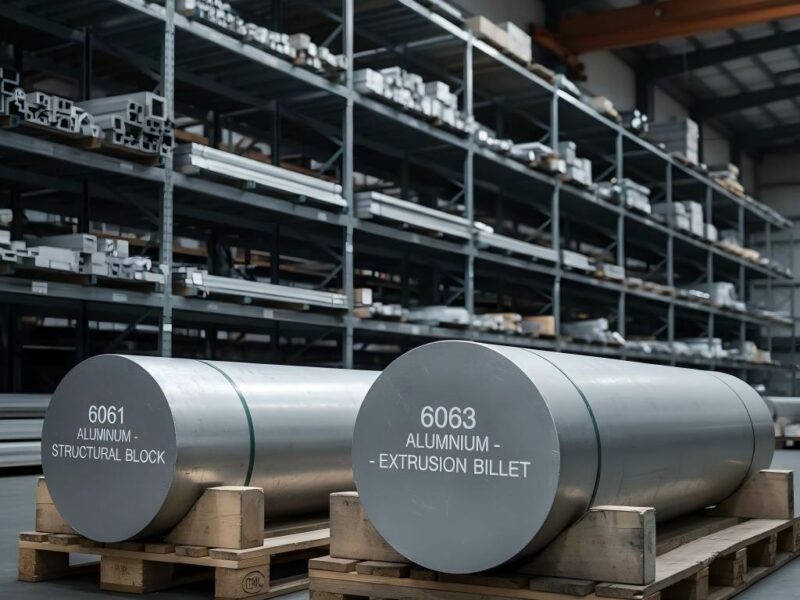
Introduction:
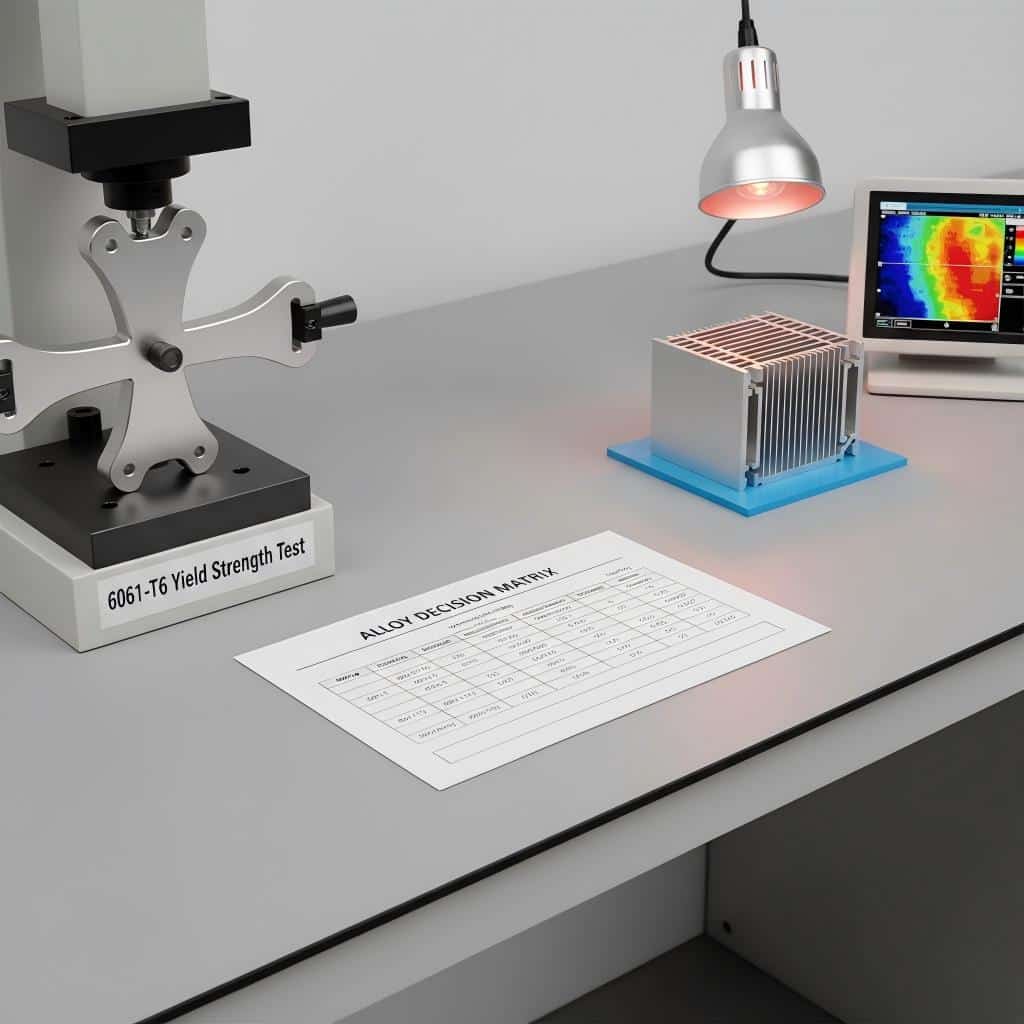
Walk into any machine shop, and you’ll hear engineers casually say ‘just use 6061’ or ‘that’s a 6063 application.’ But what do these numbers actually mean? And more importantly—how do you know which one is right for your project?
Both 6061 and 6063 are workhorse alloys in the 6000 Series (Aluminum-Magnesium-Silicon). They share many similarities: good corrosion resistance, excellent weldability, and the ability to be anodized to beautiful finishes. Yet, they serve fundamentally different roles in engineering.
In this technical guide, the Anrele Engineering Team will break down the chemistry, mechanical properties, and real-world applications of both alloys. We’ll also provide a Decision Matrix to help you choose the right material based on Strength, Machinability, Thermal Performance, and Cost.
1. Alloy Chemistry: What Makes Them Different?
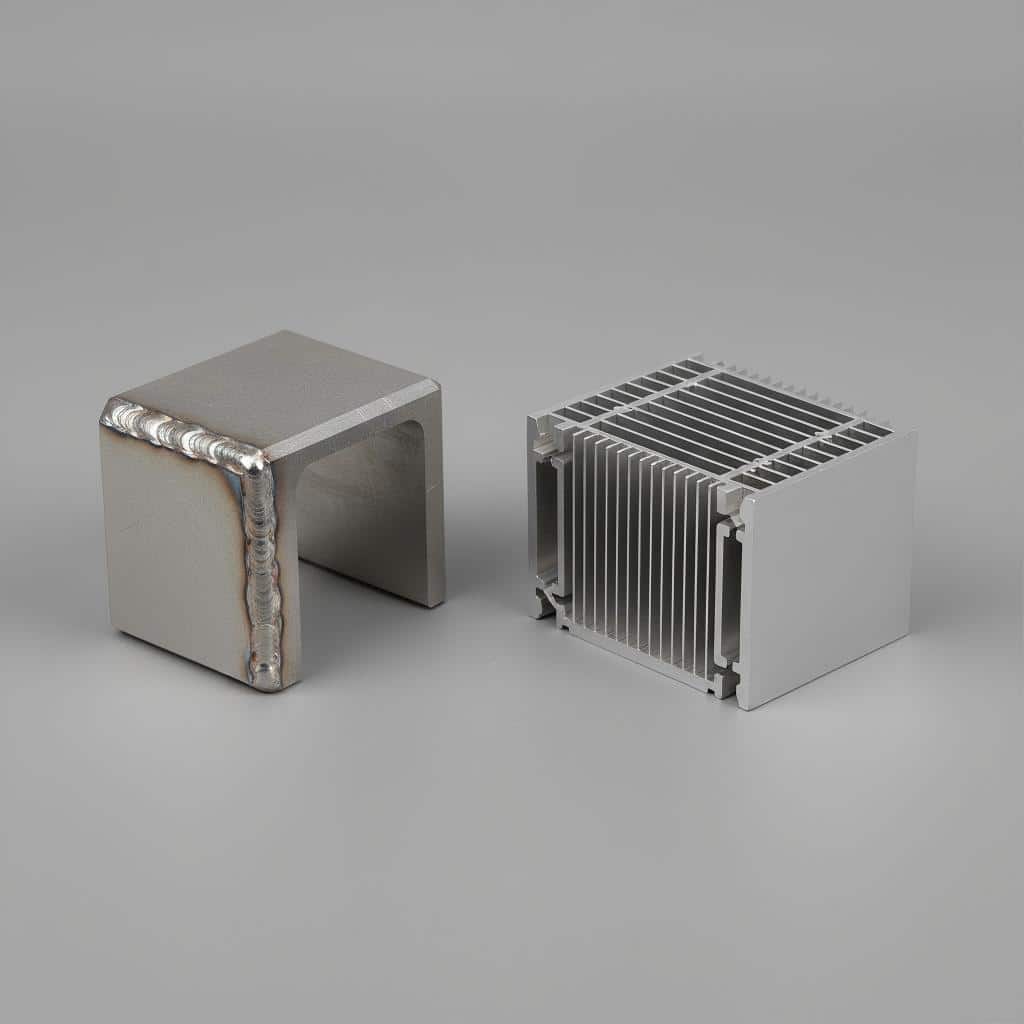
The 6000 series gets its strength from Magnesium (Mg) and Silicon (Si), which form Mg2Si precipitates during heat treatment. The ratio of these elements determines the alloy’s behavior.
6063: The Extrusion Champion
Composition: Mg ~0.45-0.9%, Si ~0.20-0.6%
Design Philosophy: Balanced for extrudability. The lower Mg content makes it softer and easier to push through extrusion dies at high speeds. This is why 6063 dominates the architectural extrusion market (window frames, curtain walls, solar frames).
6061: The Structural Workhorse
Composition: Mg ~0.8-1.2%, Si ~0.4-0.8% (Higher)
Design Philosophy: Optimized for strength. The higher Mg/Si content creates more precipitates during T6 aging, resulting in superior mechanical properties. This makes 6061 the go-to choice for CNC machined parts, structural frames, and high-stress components.
2. Mechanical Properties Showdown
Let’s compare the two most common tempers: 6063-T5 (the extrusion standard) vs. 6061-T6 (the machining standard).
| Property | 6063-T5 | 6061-T6 | Winner |
| Yield Strength | 145 MPa (21 ksi) | 276 MPa (40 ksi) | 6061-T6 |
| Tensile Strength | 186 MPa (27 ksi) | 310 MPa (45 ksi) | 6061-T6 |
| Elongation | 12% | 12-17% | Tie |
| Hardness (Brinell) | 60 HB | 95 HB | 6061-T6 |
| Thermal Conductivity | 201-218 W/m·K | 167 W/m·K | 6063-T5 |
| Machinability Rating | 70/100 | 90/100 | 6061-T6 |
Key Insight: 6061-T6 is nearly **twice as strong as 6063-T5. However, 6063 has superior thermal conductivity, making it ideal for heat dissipation applications.
3. Understanding Tempers: T5 vs. T6
The ‘T’ designation refers to the heat treatment process. This is where the magic happens.
T5 (Artificially Aged from Elevated Temperature)
Process: The profile exits the extrusion press at ~500°C. It is cooled by forced air, then artificially aged in an oven at 200°C for 6-8 hours.
Used For: 6063-T5 extrusions (architectural, heat sinks).
Advantage: Faster, lower cost, excellent surface finish.
T6 (Solution Heat Treated + Artificially Aged)
Process:The material is solution heat treated (heated to 530°C to dissolve all precipitates), then rapidly quenched in water, and finally aged at 160-180°C.
Used For: 6061-T6 plate, bar stock, machined parts.
Advantage: Maximum strength. The water quench ‘freezes’ the crystal structure, allowing more controlled precipitate formation during aging.
4. Real-World Applications: When to Use Each Alloy
When to Use 6063-T5
1. Architectural Extrusions: Window frames, curtain wall mullions, door frames. The excellent surface finish and corrosion resistance make it ideal for visible components.
2. Heat Sinks: The high thermal conductivity (218 W/m·K) makes 6063 the preferred choice for passive cooling of LEDs, power electronics, and CPUs.
3. Solar Mounting Frames:Lightweight, corrosion-resistant, and cost-effective for outdoor exposure.
4. Display Frames & Kiosks: Where appearance matters more than load-bearing capacity.
When to Use 6061-T6
1. Structural Components:CNC machined brackets, mounting plates, robotic arms. High strength-to-weight ratio.
2. Hydraulic Valve Bodies: The superior yield strength prevents deformation under high internal pressure (up to 210 bar).
3. Aerospace Fittings:Where strength and fatigue resistance are critical.
4. Marine Hardware: Propeller shafts, boat fittings. The higher strength resists bending and impact loads.
5. EV Battery Enclosures: Structural strength combined with corrosion resistance.
5. The Decision Matrix: A Practical Selection Guide
Use this matrix to select the right alloy based on your primary design constraint:
| Design Priority | Recommended Alloy | Reasoning |
| Maximum Strength | 6061-T6 | 2x stronger yield strength (276 vs 145 MPa) |
| Thermal Conductivity | 6063-T5 | Better heat dissipation (218 vs 167 W/m·K) |
| Surface Finish Quality | 6063-T5 | Smoother extrusion surface, better anodizing |
| Machinability (Tight Tolerances) | 6061-T6 | Harder material holds tighter tolerances |
| Welding (Post-Weld Strength) | 6061-T6 | Retains more strength after welding |
| Complex Shapes (Extrusion) | 6063-T5 | Softer alloy flows easier through dies |
| Cost Efficiency (High Volume) | 6063-T5 | Lower material cost + faster extrusion |
| Structural Load-Bearing | 6061-T6 | Higher yield prevents permanent deformation |
6. Cost Considerations
Material Cost: 6063 is typically 5-10% cheaper than 6061 due to lower alloying content.
Processing Cost:Extrusion (6063) is far cheaper than CNC machining (6061) for high-volume production.
Example: A 2-meter heat sink profile in 6063-T5 might cost $8-12, while machining the same shape from 6061-T6 bar stock could cost $50-80.
7. Debunking Common Myths
Myth 1: ‘6063 is weak and can’t handle stress.’
Reality: 6063-T5 has adequate strength for most non-structural applications. It’s used in millions of window frames worldwide.
Myth 2: ‘6061 can’t be extruded.’
Reality: 6061 can be extruded, but at slower speeds and with more tool wear. It’s simply not as economical as 6063 for extrusion.
Myth 3: ‘You can’t anodize 6061.’
Reality: Both alloys anodize well. However, 6063 produces a slightly more uniform color due to fewer alloying elements.
8. Frequently Asked Questions
Q1: Can I use 6063 for a structural frame?
A: Only if the loads are light. For anything load-bearing, use 6061-T6.
Q2: Which alloy is better for heat sinks?
A: 6063-T5. Its higher thermal conductivity (218 W/m·K) outperforms 6061.
Q3: Can I mix 6061 and 6063 in the same assembly?
A: Yes. Just ensure proper fastening and account for different thermal expansion rates.
Q4: What if I need both strength AND thermal conductivity?
A: Consider 6063-T6 (stronger than T5) or use a hybrid design with 6061 structural parts and 6063 heat sink fins.
Q5: Which alloy is better for outdoor use?
A: Both have excellent corrosion resistance when anodized. 6063 is slightly better due to lower copper content.
Conclusion
The choice between 6061 and 6063 isn’t about ‘better’ or ‘worse’—it’s about matching the material to your specific requirements. 6063-T5 excels in extruded profiles, heat dissipation, and cost-effective high-volume production. 6061-T6 dominates in structural applications, CNC machined parts, and anywhere maximum strength is required.
At Anrele, we stock both alloys and can guide you through the selection process based on your mechanical loads, thermal requirements, and budget constraints.
Not sure which alloy fits your project? Contact the Anrele Engineering Team for a free material consultation and design review.