Introduction:
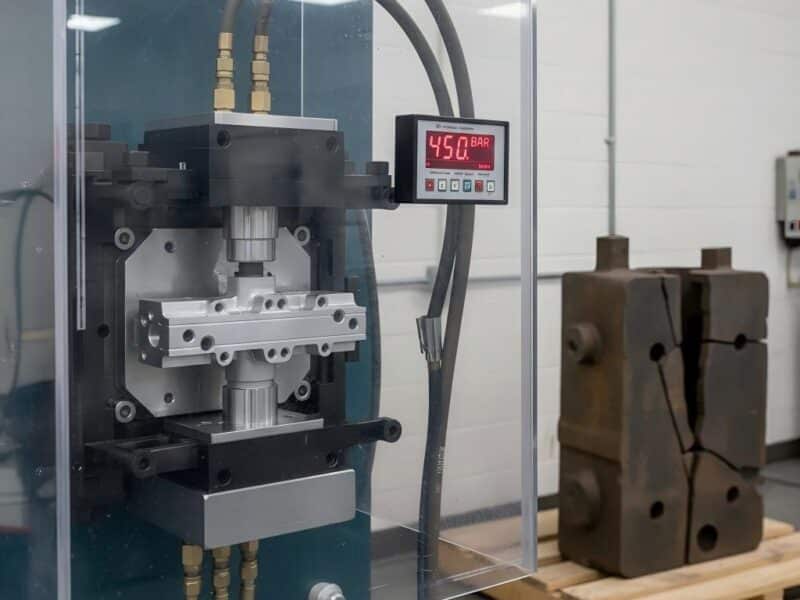
For decades, the hydraulic industry followed a simple, unwritten rule: ‘If it operates above 200 bar, make it out of steel.’ Ductile iron (G25) and carbon steel (1018) have long been the default choices for hydraulic manifold blocks due to their immense strength, fatigue resistance, and low cost.
However, the landscape of machinery is changing. The rise of Mobile Hydraulics—electric forklifts, aerial work platforms, agricultural drones, and EV chassis systems—has made Weight a critical design constraint. Every kilogram of steel on an electric vehicle reduces battery range and payload capacity.
This shift has driven the rapid adoption of Aluminum Hydraulic Manifolds. But engineering skepticism remains: Can aluminum really handle 3000 PSI (210 bar) or even 5000 PSI (350 bar) without exploding? What about thread stripping? What about fatigue failure? In this engineering whitepaper, the Anrele Engineering Team moves beyond the ‘lightweight’ marketing pitch. We will analyze the Yield Strength of 6061-T6 vs. 7075-T6, calculate Thread Engagement Lengths, and analyze the Young’s Modulus stiffness required to prevent spool binding.
1. Material Science: The Three Contenders
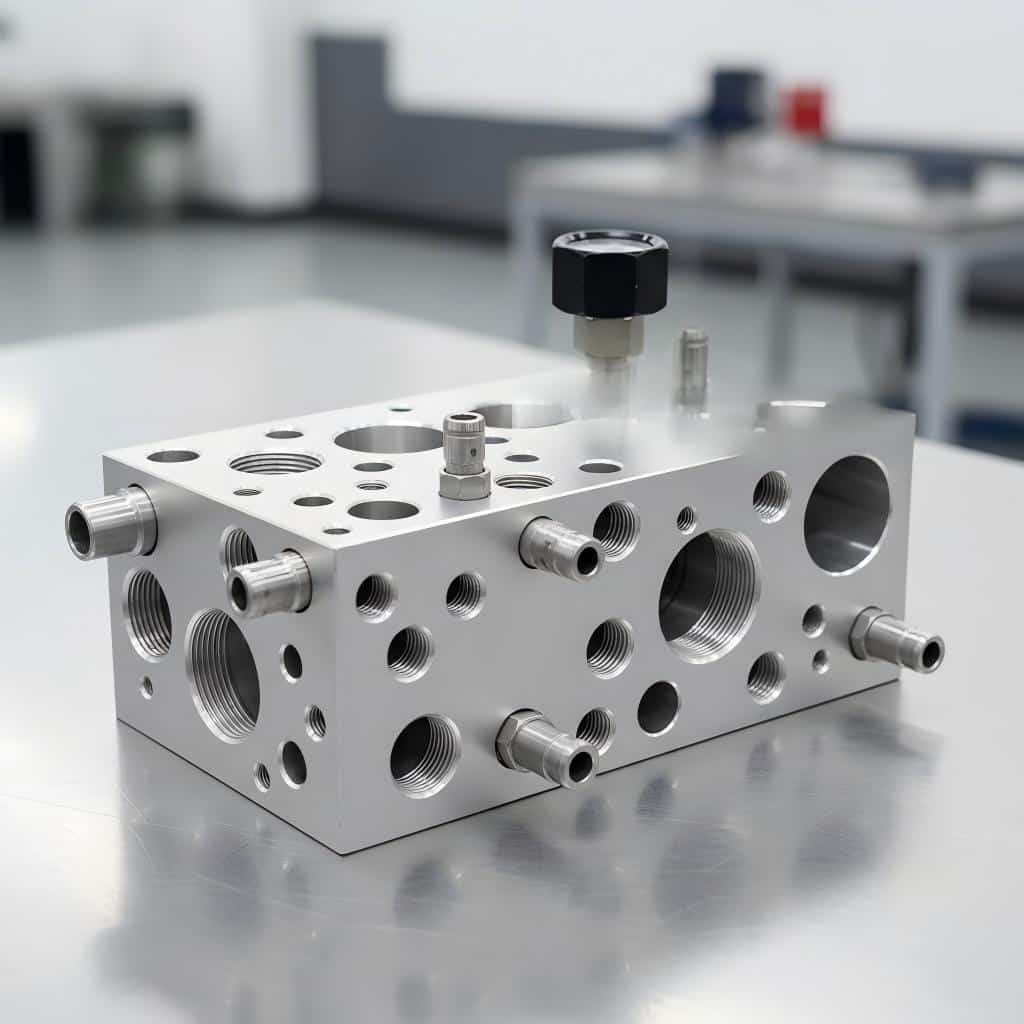
When designing a manifold, you are essentially choosing between three materials. Understanding their microstructure is key to safety.
Ductile Iron (CCC / Dura-Bar)
The Old Standard. Cheap, heavy (~7.2 g/cm³), and strong (~310 MPa Yield). Drawback: It is a casting. It is porous. High-pressure oil can sometimes ‘weep’ through the metal grain if the casting quality is poor. It is also prone to rusting, requiring secondary painting or plating processes.
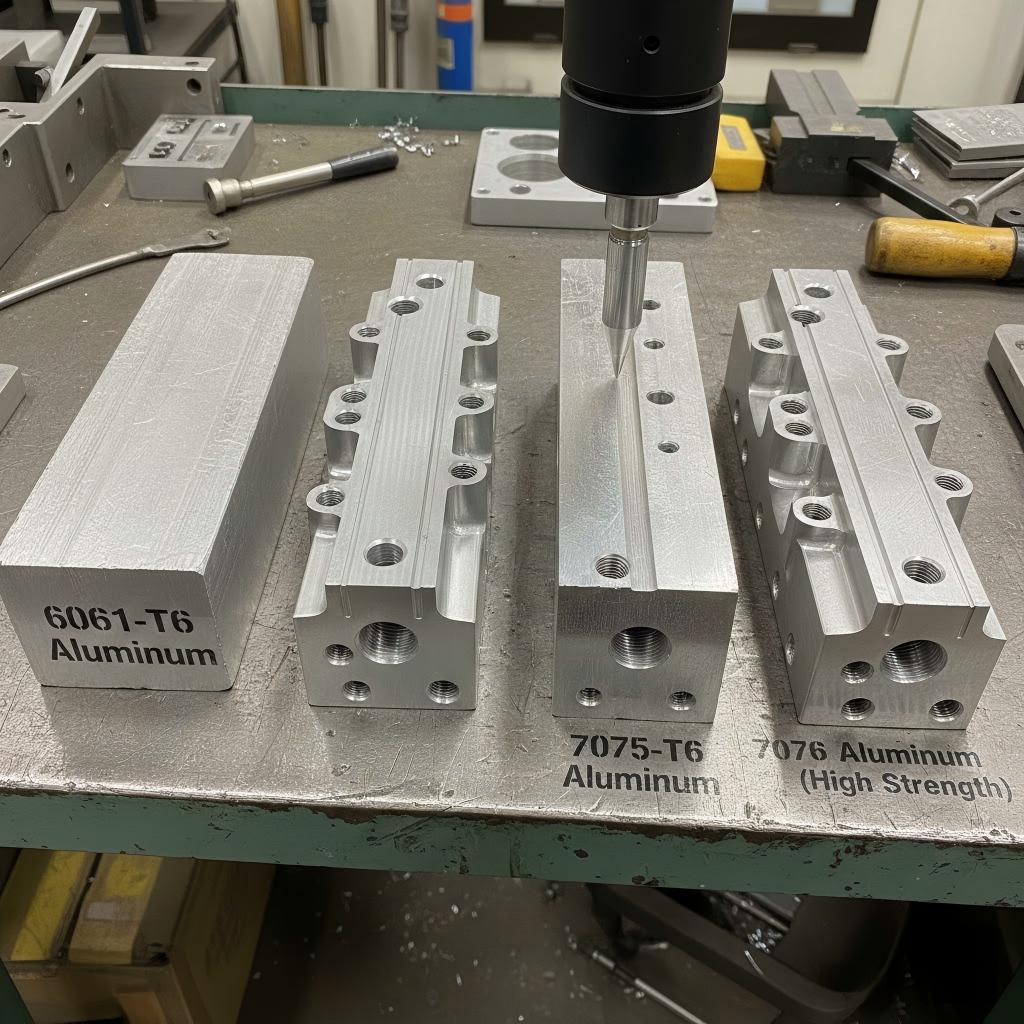
Aluminum 6061-T6 (The Workhorse)
The Standard.Density: 2.70 g/cm³ (1/3rd the weight of iron). Yield Strength: ~276 MPa. Limit: Anrele recommends 6061-T6 for systems up to 210 bar (3000 PSI). Beyond this pressure, the cyclic fatigue life becomes a concern, and thread deformation can occur.
Aluminum 7075-T6 (The Aerospace Grade)
The Game Changer.Often called ‘Zicral,’ this alloy contains Zinc as the primary alloying element. Yield Strength: ~503 MPa.Reality Check: 7075-T6 is stronger than many grades of mild steel and ductile iron, yet retains the lightweight properties of aluminum. Anrele uses 7075-T6 for high-pressure systems (up to 350 bar / 5000 PSI) where weight reduction is non-negotiable.
2. Burst Pressure Analysis: The Math of Safety
Engineers often fear that aluminum will explode under pressure. Let’s look at the math using Barlow’s Formula** (modified for thick-walled vessels) to calculate the theoretical failure point.
$$P_{burst} = \frac{2 \times S \times t}{D}$$
Where:
• P:Burst Pressure
• S:Tensile Strength of Material (7075-T6 = 570 MPa)
• t: Wall Thickness (minimum distance from port to edge)
• D: Outside Diameter (effective section)
Scenario: A hydraulic gallery with a diameter of 20mm and a minimum wall thickness of 10mm.
1. Ductile Iron (65-45-12): Tensile ~450 MPa. Safety Factor is High.
2. Aluminum 6061-T6: Tensile ~310 MPa. Safety Factor ~3:1 at 210 bar (Adequate).
3. Aluminum 7075-T6: Tensile ~570 MPa. Excellent. It actually has a higher burst pressure threshold than standard Ductile Iron in many configurations.
3. The Stiffness Problem: Young’s Modulus and Spool Binding
Burst pressure is not the only failure mode. Elastic Deformation (Flexing) is a silent killer in aluminum manifolds.
The Physics:
• Steel Young’s Modulus: ~210 GPa (Very Stiff)
• Aluminum Young’s Modulus: ~70 GPa (Flexible)
Aluminum is 3x more flexible than steel. Under 350 bar pressure, an aluminum block will physically expand and warp slightly. If you have a high-precision cartridge valve with a tight spool clearance (e.g., 5 microns), this block warping can pinch the bore, causing the valve to stick or bind.
The Anrele Solution: For high-pressure aluminum blocks, we do not simply copy the steel design. We increase the material bulk around sensitive valve bores to increase the local rigidity. We also recommend 7075-T6, which, while having a similar modulus, has higher yield strength to resist permanent deformation.
4. Thread Engineering: Preventing Stripped Threads
The most common failure in aluminum manifolds is not the block bursting, but the threads stripping when a technician over-torques a fitting.
Calculation: Engagement Length (Le)
For steel-into-steel, a thread engagement of 1.0x Diameter is usually sufficient. For steel-into-aluminum, you must increase the engagement length to 1.5x or 2.0x Diameter to prevent shear failure of the aluminum threads.
The Helicoil Solution: For ports that will be assembled and disassembled frequently (maintenance ports), or for ultra-high pressure ports (>300 bar), Anrele installs **Stainless Steel Helicoil Inserts or Key-Locking Inserts. This provides a steel-on-steel interface for the fitting, completely eliminating the risk of thread wear.
5. Engineering Comparison Data Table
| Feature | Aluminum 6061-T6 | Aluminum 7075-T6 | Ductile Iron (G25) |
| Density | 2.70 g/cm³ | 2.81 g/cm³ | 7.20 g/cm³ |
| Yield Strength | 276 MPa | 503 MPa | 310 MPa |
| Young’s Modulus | 69 GPa | 71 GPa | 170 GPa |
| Max Pressure | ~210 Bar | ~350 Bar | 350 Bar+ |
| Fatigue Limit | None (Finite Life) | None (Finite Life) | High (Infinite Life) |
| Corrosion | Excellent (Anodized) | Good (Anodized) | Poor (Needs Paint) |
Analysis:While 7075 raw material is expensive, the high-speed CNC machining of aluminum (10,000+ RPM spindle speeds) makes the final part cost-competitive with steel.
6. The Fatigue Factor: S-N Curves
The Achilles’ heel of aluminum is **Fatigue**. Steel has an ‘Endurance Limit’—a stress level below which it will theoretically last forever. Aluminum does not. Even low stress cycles will eventually cause micro-cracks over millions of cycles.
Mitigation Strategies at Anrele:
1. Radius Ports: Sharp corners are stress risers. We use specialized form tools to create smooth radii at the bottom of all ports.
2. Over-Sizing: We design the wall thickness such that the operational stress is only 20% of the Yield Strength. This pushes the fatigue failure point out to >10 million cycles, which exceeds the machine’s lifespan.
7. Anodizing: Type II vs Type III
Raw aluminum is susceptible to galvanic corrosion. Anrele manifolds undergo strict Anodizing.
Type II (Standard): Good corrosion resistance. Available in colors (Red/Blue/Gold) for port identification (Pressure/Tank/Pilot lines).
Type III (Hard Coat): Creates a thick (50μm), ceramic-hard surface. We recommend this for harsh environments (Marine/Salt) or for sliding wear surfaces. It significantly increases thread durability.
8. Extended FAQ: Manifold Design
Q1: Can I use water-glycol fluid with Anrele aluminum manifolds?
A: Yes, but Anodizing is mandatory. Raw aluminum can pit when exposed to water-based fluids with high pH. Anodized aluminum is chemically inert to most fluids, including Skydrol.
Q2: Will steel cartridge threads strip the aluminum?
A: If torqued to spec, no. For frequently disassembled ports, we highly recommend specifying Helicoil inserts.
Q3: Do I need to ground (earth) an anodized block?
A: Yes. Anodizing is an electrical insulator. If you mount electrical solenoids, you must ensure grounding. Anrele provides manifolds with a ‘masked’ (bare metal) grounding point.
Q4: Can aluminum manifolds be repaired?
A: Minor thread damage can be repaired with Helicoils. However, structural cracks cannot be welded safely due to oil contamination in the metal pores. Replacement is the only safe option.
Conclusion
The era of heavy, rusting cast iron manifolds is ending for mobile machinery. With advanced alloys like 7075-T6, engineers no longer have to choose between Strength and Weight. You can have both.
Anrele Aluminum Hydraulic Manifolds offer the burst pressure resistance required for modern 350 bar systems, with the lightweight efficiency demanded by the electric future.
Ready to shed some weight? Explore our standard Aluminum Manifold Block Configurations or send us your hydraulic schematic for a custom 7075-T6 design review.